Context and purpose.
For a major telecommunications provider, I worked on the Residential side of an omnichannel sales and service platform supporting approximately 7,000 agents across Care and Retail. I spearheaded the design of a new streaming-subscription area, establishing the interaction model and reusable patterns that supported a wide range of customer, product, pricing, and account scenarios. The production work later informed the next generation of the platform.
What the project needed to achieve.
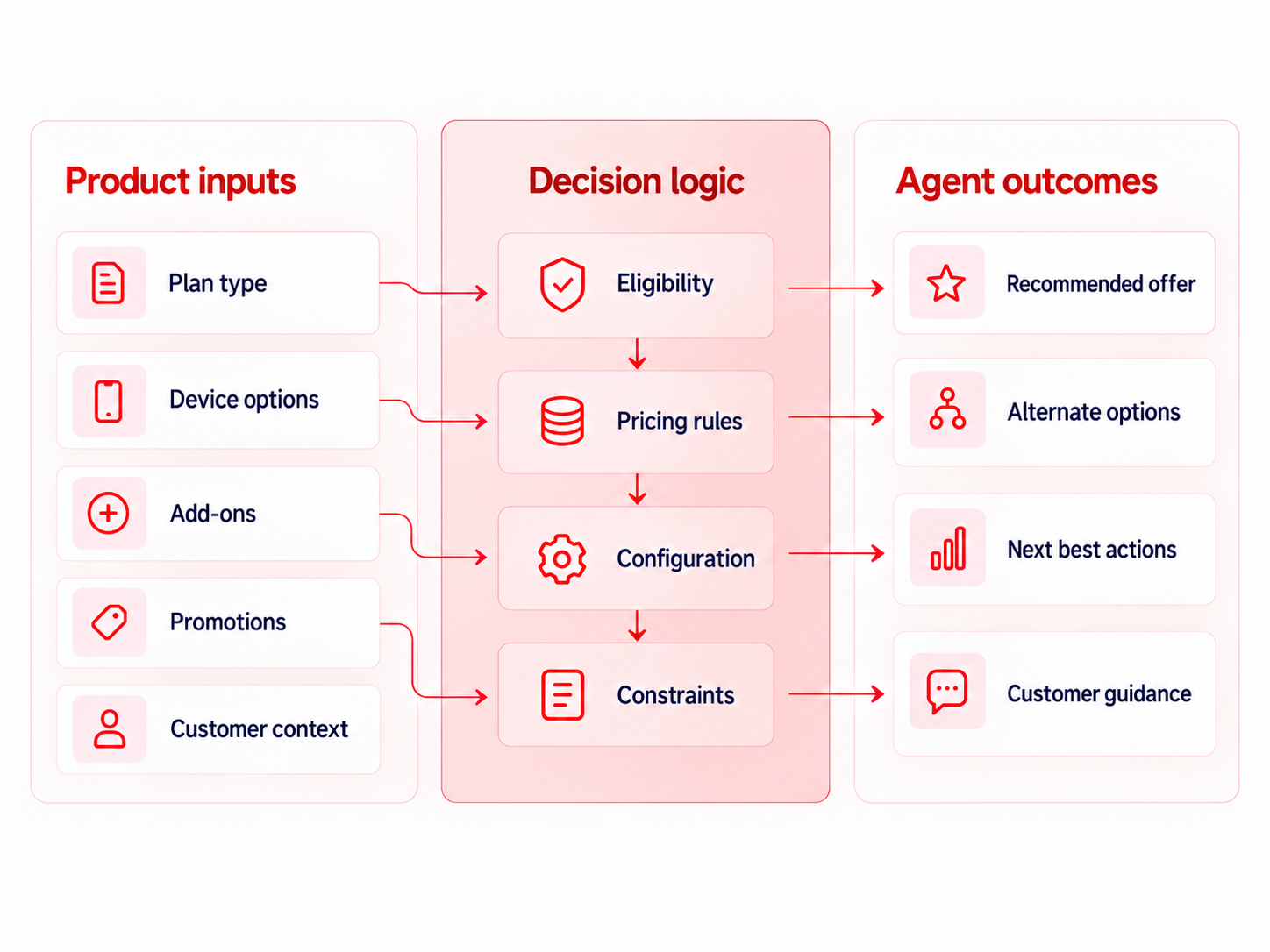
Give agents a consistent way to understand which streaming services a customer already had, which subscriptions and bundles were available, and which actions were appropriate for that account. Translate changing eligibility, pricing, discounts, and subscription rules into clear states without forcing agents to interpret the underlying business logic during a customer conversation.
Establish reusable interaction patterns across sales and servicing, and make the consequences of an add-on, upgrade, or bundle selection clear through cart and order review. The design objectives were clarity, consistency, and implementation readiness; measured changes in handling time or conversion were not available to attribute to this work.
The problem, constraints and competing priorities.
The omnichannel platform had to absorb complexity without making agents carry it. Product, package, subscription, pricing, discount, equipment, eligibility and account states could all change what an agent should see or do next, and those decisions could cascade into cart and order-review behaviour. At the same time, new-customer sales and existing-customer servicing flows were being designed in parallel while legacy states, edge cases, technical constraints and MVP trade-offs continued to shift. The design challenge was to turn that moving ruleset into consistent, reusable patterns that still felt like one coherent product across Care and Retail.
The competing priorities were supporting highly variable customer and subscription states while keeping agent journeys consistent and manageable across channels.
My responsibilities, ownership and collaboration.
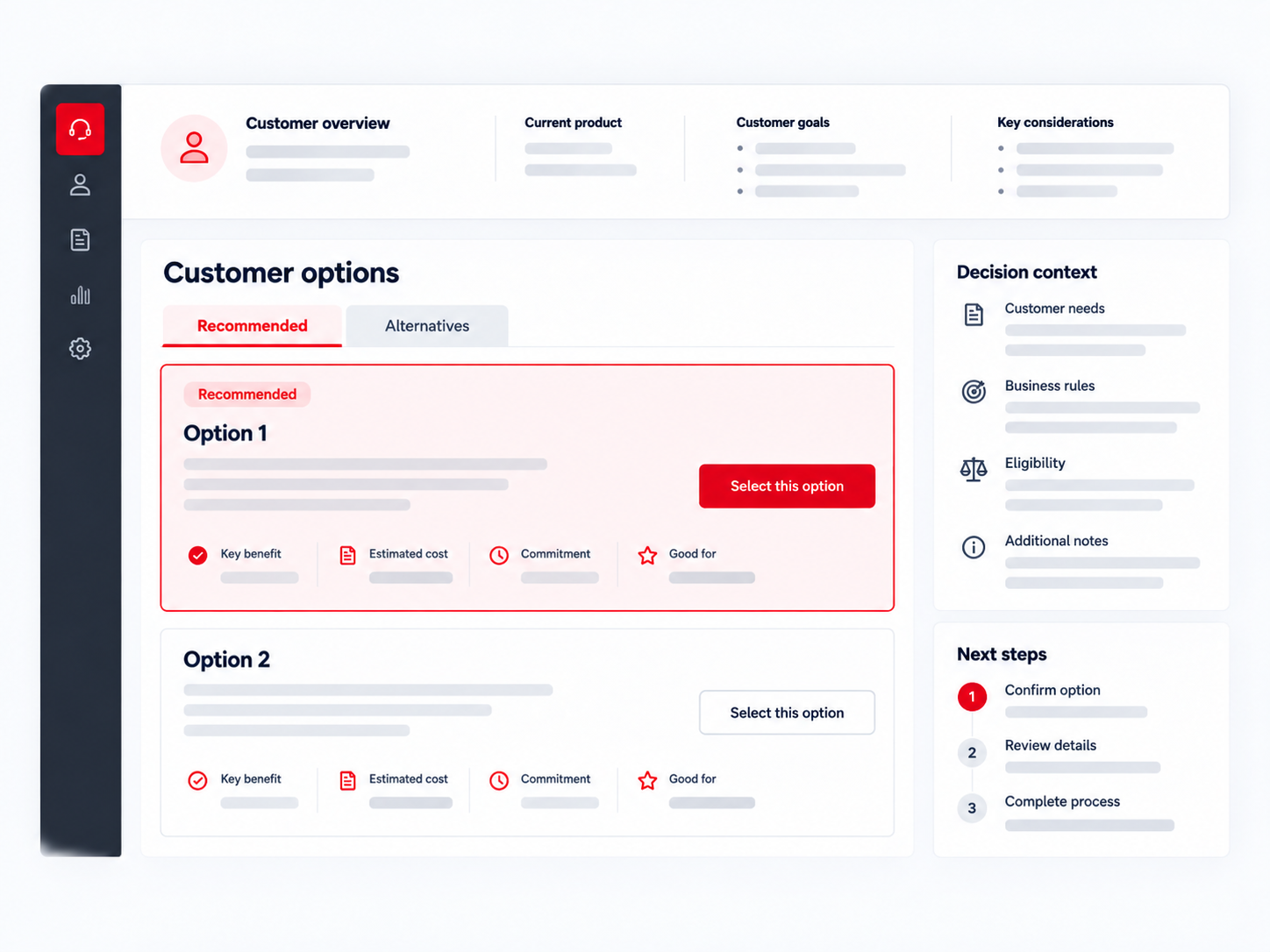
I owned UX and UI direction for key workflows, translating product rules and edge cases into predictable interaction patterns and implementation-ready states. I mapped meaningful combinations of subscription ownership, eligibility, bundle state, pricing and available actions, then reduced them into reusable card states. I used detailed prototypes and design reviews to surface dependencies, drive decisions with product and engineering, and align adjacent designers around shared behaviour so patterns stayed consistent across the platform rather than fragmenting by feature or workstream. Later in the design cycle, I also used AI-assisted exploration to test interaction concepts, component states and edge cases more quickly.
The options, trade-offs and reasoning behind the key choice.
Several pivotal design decisions shaped the work as the product evolved. They centred on simplifying a large and changing rule set into reusable states, deciding how much context agents needed at each point in the journey, and keeping interaction patterns consistent across related sales and service flows. Together, those decisions made the experience easier for agents to interpret during live conversations and gave product and engineering a clearer model to implement, reuse, and extend as requirements changed.
What was delivered and the impact it made.
The streaming-subscription experience moved into production with a reusable interaction model for handling subscription states, eligibility, pricing, upgrades, and downstream order behaviour across related agent journeys. Patterns from the work, including contextual guidance and shared state logic, were reused beyond the original flow. I later carried that production foundation into the next generation of the platform, redesigning the same product area rather than starting from scratch. The outcome was not only a shipped experience, but a design model durable enough to be reused, extended, and evolved.

How this work shaped my product design approach.
Designing for agent-led sales and service reinforced the importance of making commercial rules understandable at the point of decision. I focused on translating eligibility, subscription states and bundle relationships into interaction patterns that agents could apply consistently across journeys. That experience strengthened my ability to connect business logic with practical frontline workflows and establish foundations that can support future product changes.
This project contains sensitive client information and requires approval.
Approved access lasts 24 hours and includes all Controlled case studies.