The Credit Calculator was integrated into an enterprise support platform serving 12,000+ agents nationwide.
Support agents were making customer-credit decisions inside a legacy workflow that placed too much decision logic on the person using it. The experience also had to support two different credit scenarios without making agents interpret the underlying rules themselves.
Two fundamentally different decision paths had to work inside the same existing application. Discretionary credits required guided agent judgement, while non-discretionary credits followed predefined rules, including province- and territory-specific tax treatment.
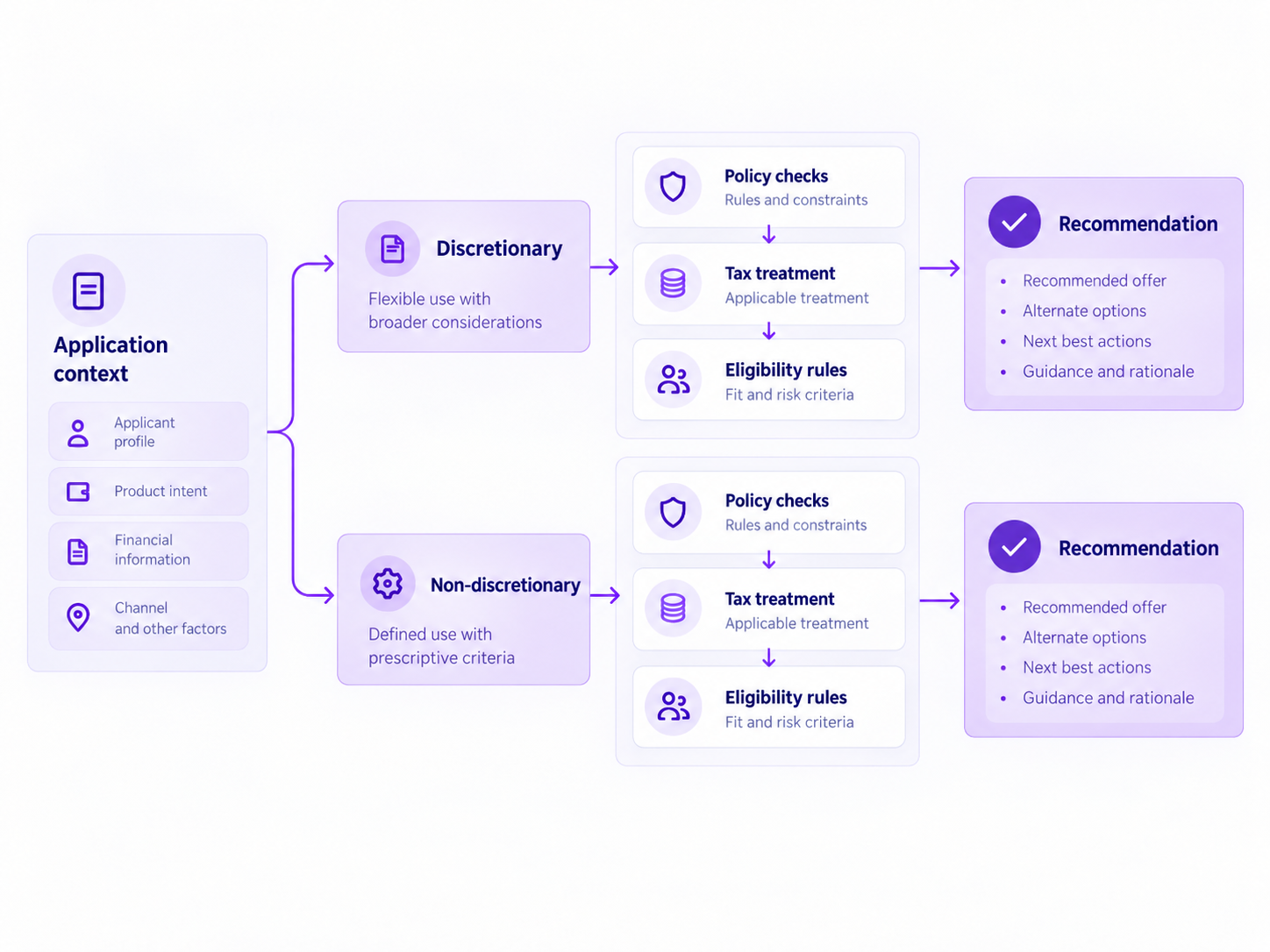
I researched the agent workflow, modelled the decision logic for both credit paths, designed and prototyped the experience, and translated business, policy, and tax requirements into interaction behaviour that could work inside the existing application.
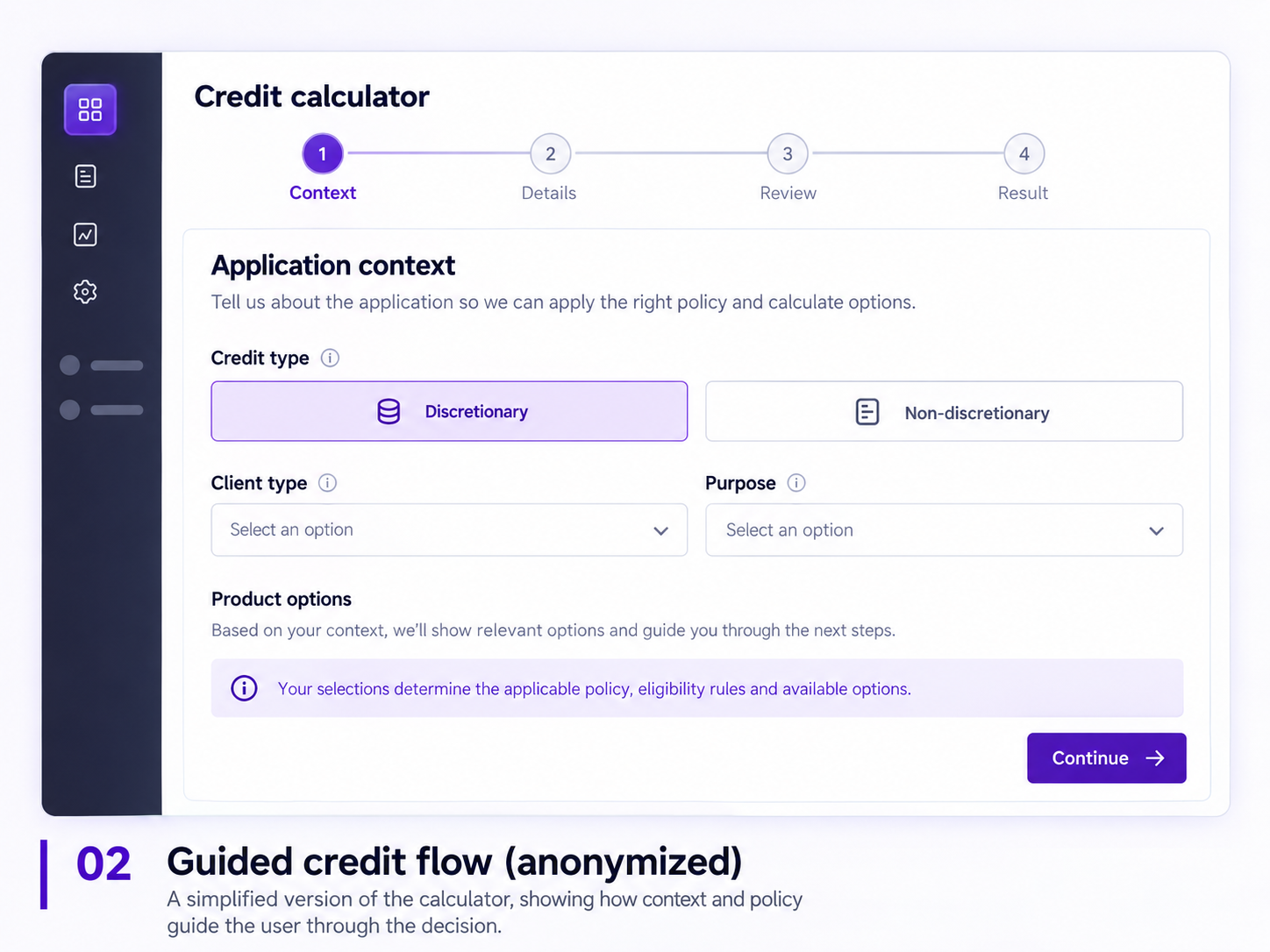
Treat discretionary and non-discretionary credits as different interaction models rather than variations of one calculator. Discretionary cases used a guided calculator; non-discretionary cases bypassed it and followed rules-based determination.
The delivered experience established two distinct decision models inside the same enterprise application. Discretionary credits used guided standard options with a separate Override path, while non-discretionary credits followed rule-driven determination, including jurisdiction-specific tax treatment. The resulting flows made the intended product behaviour explicit for review and implementation.
Explore the deeper workflow logic, implementation context, and approved client-specific material behind this project.
VIEW FULL CASE STUDYOnce verified, you’ll get 7-day access to all controlled case studies.