Context and purpose.
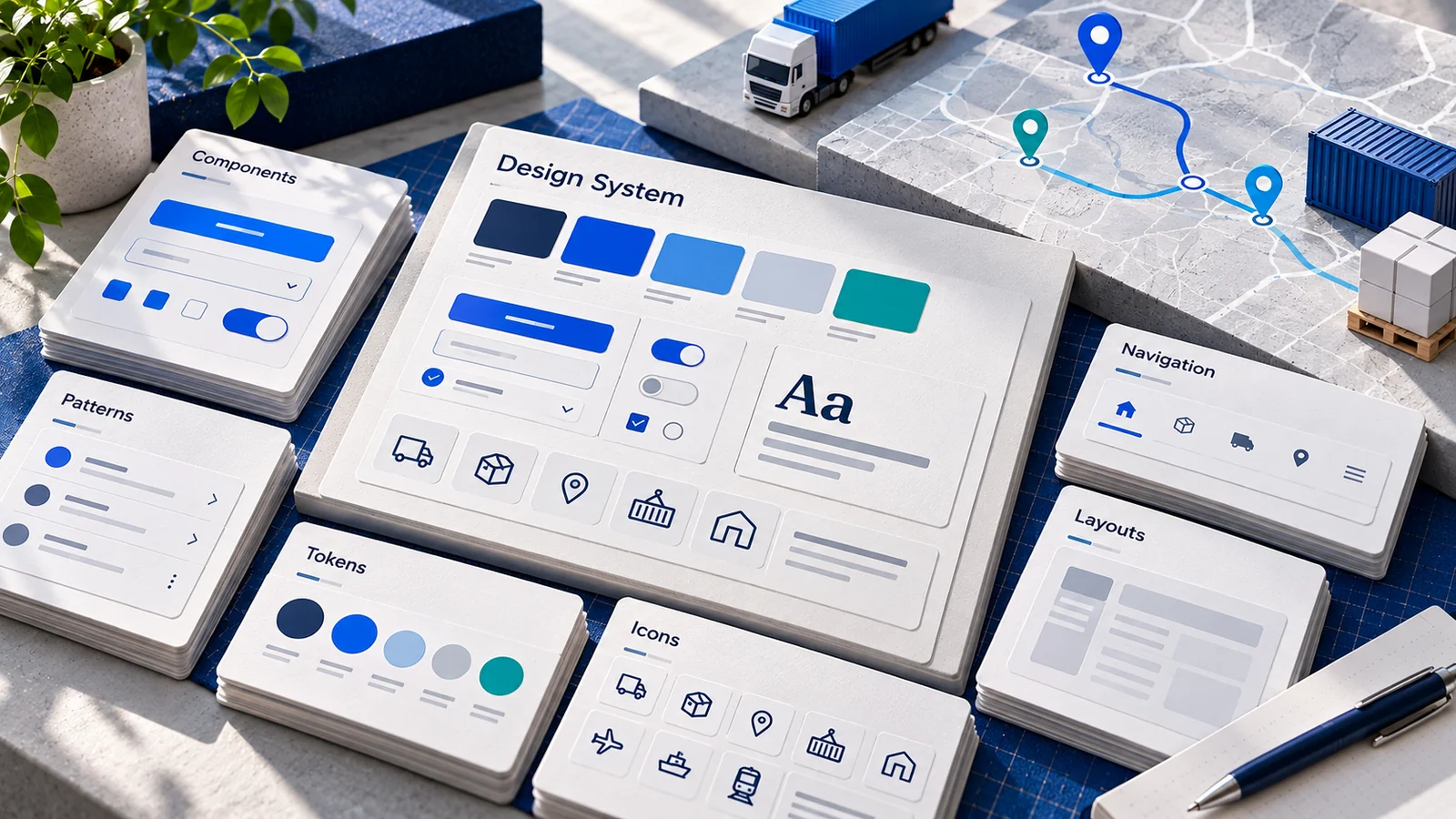
A 17-role logistics platform needed one shared interface foundation that could support many workflows and contributors without letting repeated product decisions fragment into inconsistent components, states, and interaction patterns.
What the project needed to achieve.
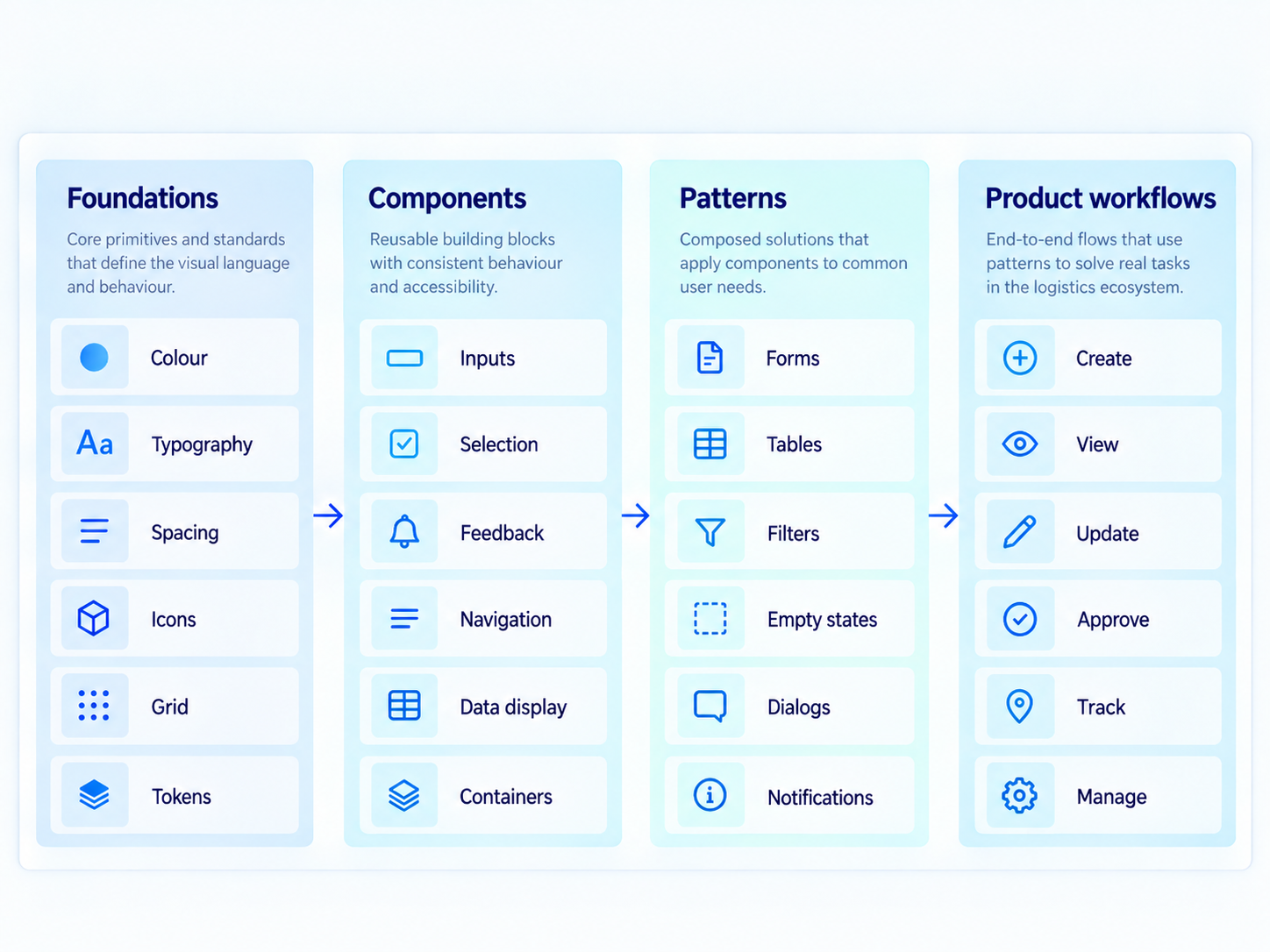
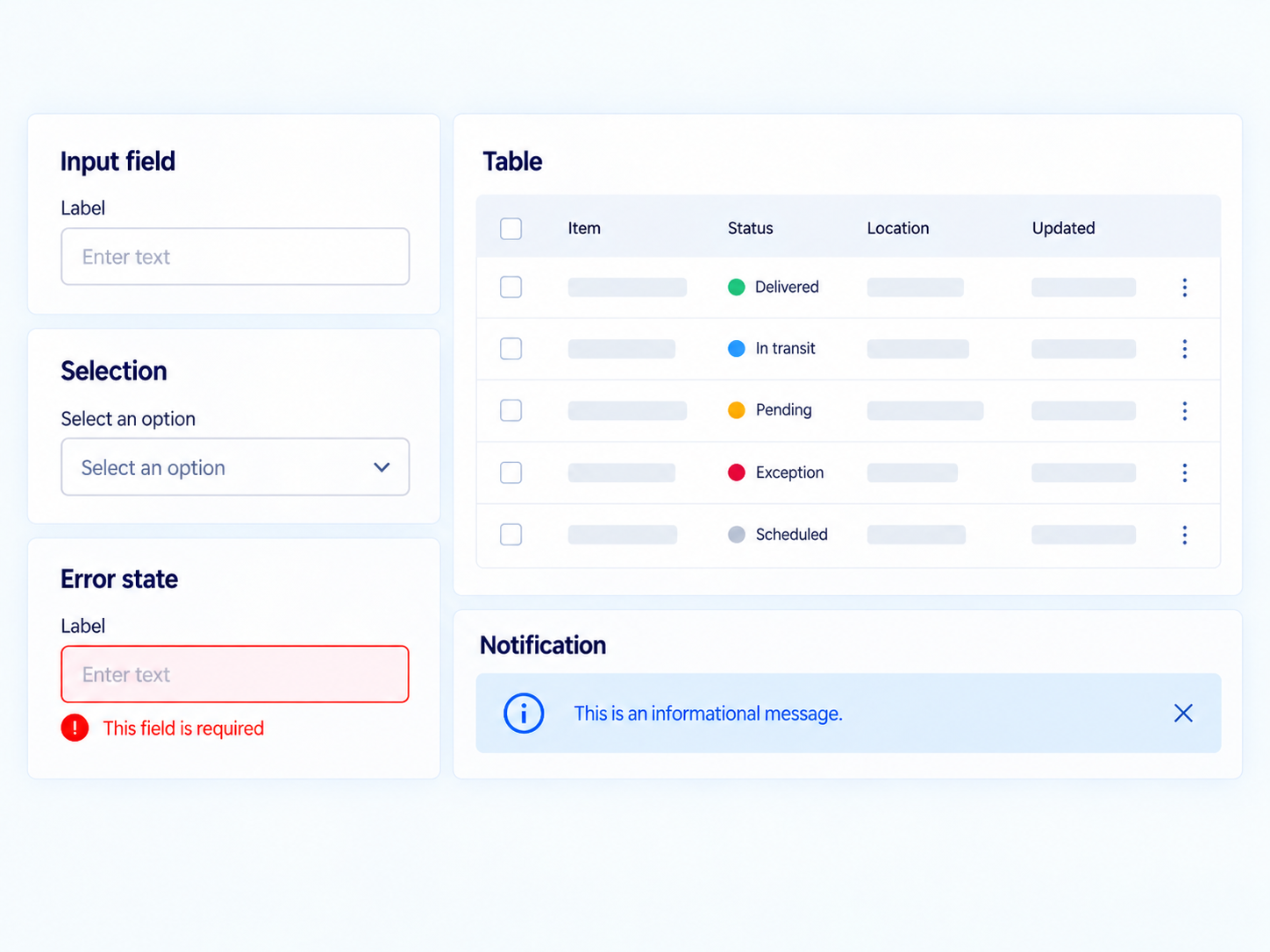
Adapt an existing design-system foundation into a practical shared language for a logistics platform serving 17 user roles. Define reusable components, variants, validation and status states, and usage guidance that work across quoting, shipment, operational, and administrative journeys. Use established Material UI conventions where appropriate while extending patterns for logistics-specific requirements. Support designers and developers with documented decisions that remain useful during active product delivery rather than creating an isolated component library.
The problem, constraints and competing priorities.
The challenge was not simply creating components. An existing shared foundation had to be adapted for a product spanning 17 roles, multiple workflow families, domain-specific states, accessibility expectations, and implementation constraints, while remaining usable by both designers and developers.
The competing priorities were reusing an existing component foundation while accommodating logistics-specific needs, accessibility and implementation constraints during active product delivery.
My responsibilities, ownership and collaboration.
I adapted and scaled the existing shared design-system foundation for the logistics platform. I refined components and variants, introduced domain-specific states, documented reusable patterns, and worked with designers, product partners, and developers to keep the system aligned with real workflow and implementation needs.
Related reading: Effective Communication for Designers & Devs.
The options, trade-offs and reasoning behind the key choice.
Use established Material UI patterns as a reference baseline rather than reinventing familiar behaviour, then extend the system only where the logistics product required different states or interaction rules. The trade-off was less local novelty in exchange for faster decisions, greater consistency, stronger accessibility guidance, and lower implementation ambiguity.
What was delivered and the impact it made.
The broader logistics platform was publicly launched by the client on February 2, 2026. That launch provides external confirmation that the product ecosystem supported by this design-system work reached market, without independently measuring the design system’s adoption or delivery-speed impact.
The resulting system became a reusable foundation for the platform’s multi-role workflows, with documented component states and clearer alignment between product design and implementation.
How this work shaped my product design approach.
This work reinforced that effective design-system leadership is as much about judgement and collaboration as component creation. By extending existing foundations and documenting meaningful exceptions, I helped shape a system that could support complex logistics workflows without introducing unnecessary variation. The experience continues to inform how I balance consistency, delivery pressure and the practical needs of designers and engineers.
Email required to receive your login code.
INSTANT ACCESSInstant access lasts 7 days and includes all Controlled case studies.