Context and purpose.
Emergency-services validation involved specialized technical workflows, but users should not have to understand the full complexity of the underlying system simply to complete the work relevant to their responsibilities.
What the project needed to achieve.
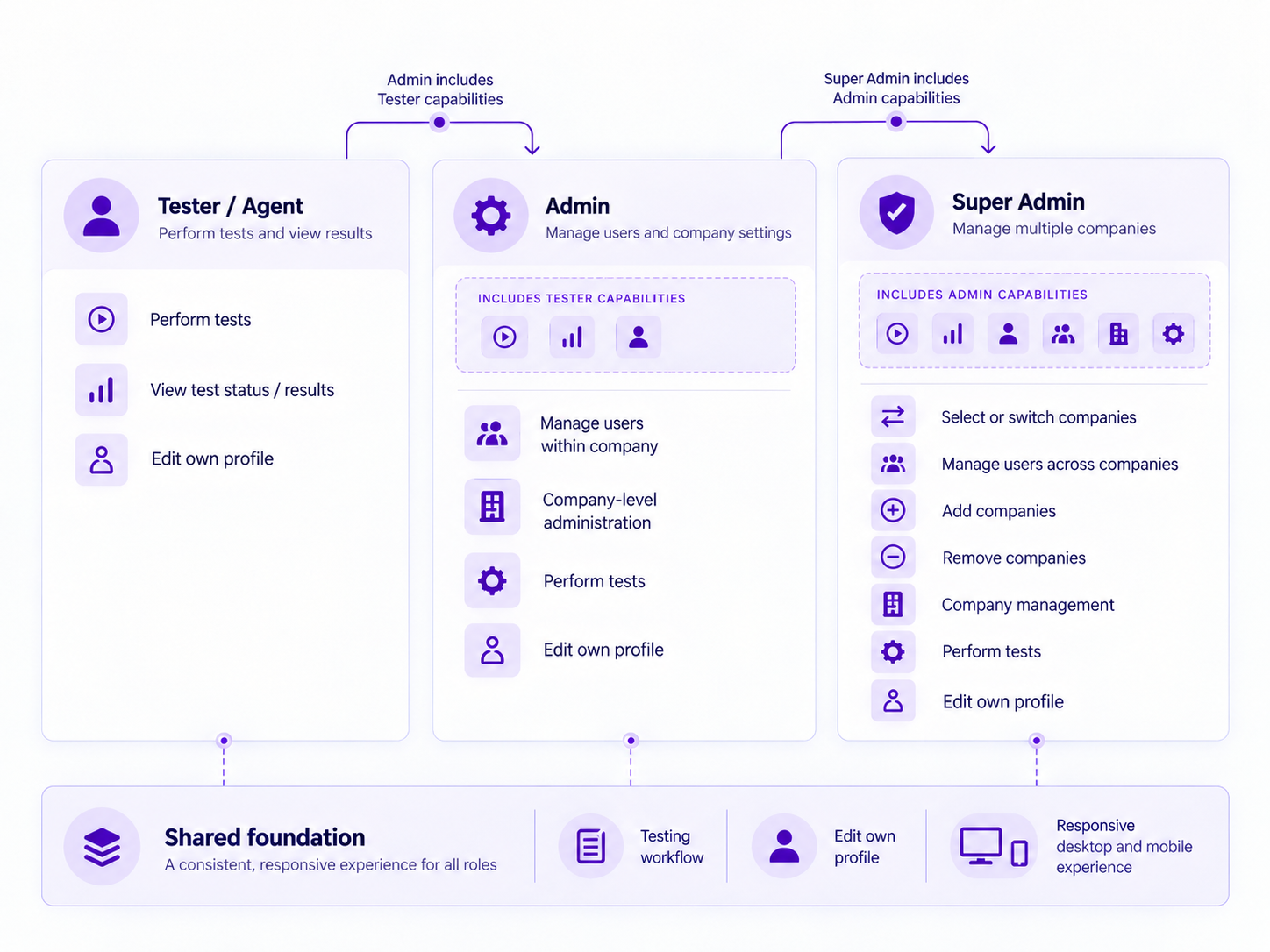
Design a coherent testing portal from the ground up for three permission levels: Tester / Agent, Admin, and Super Admin. Let testers run and review validation activities, give administrators the appropriate company-user controls, and enable super administrators to manage responsibilities across companies without exposing unnecessary functions to lower-permission users. Use established TELUS Design System patterns to support accessible, responsive workflows and provide implementation-ready screens, states, and interaction guidance.
The problem, constraints and competing priorities.
The portal had to support three expanding responsibility levels inside one coherent product: Tester / Agent, Admin, and Super Admin. Each role required different combinations of testing, user management, company management, and oversight, while accessibility, responsive behaviour, and a shared product language had to remain consistent.
The competing priorities were giving each role the capabilities it needed without exposing unnecessary complexity, while keeping navigation and interaction patterns consistent.
My responsibilities, ownership and collaboration.
I was the sole designer on the project. I owned discovery, information architecture, workflow definition, interaction design, responsive UI direction, and handoff, working with stakeholder and technical partners and using the TELUS Design System as the foundation.
The options, trade-offs and reasoning behind the key choice.
I structured the portal around responsibility and permission scope rather than exposing the same product model to every user. Reusing established design-system patterns reduced local variation, but created a more consistent, accessible, and implementation-ready foundation for specialized workflows.
What was delivered and the impact it made.
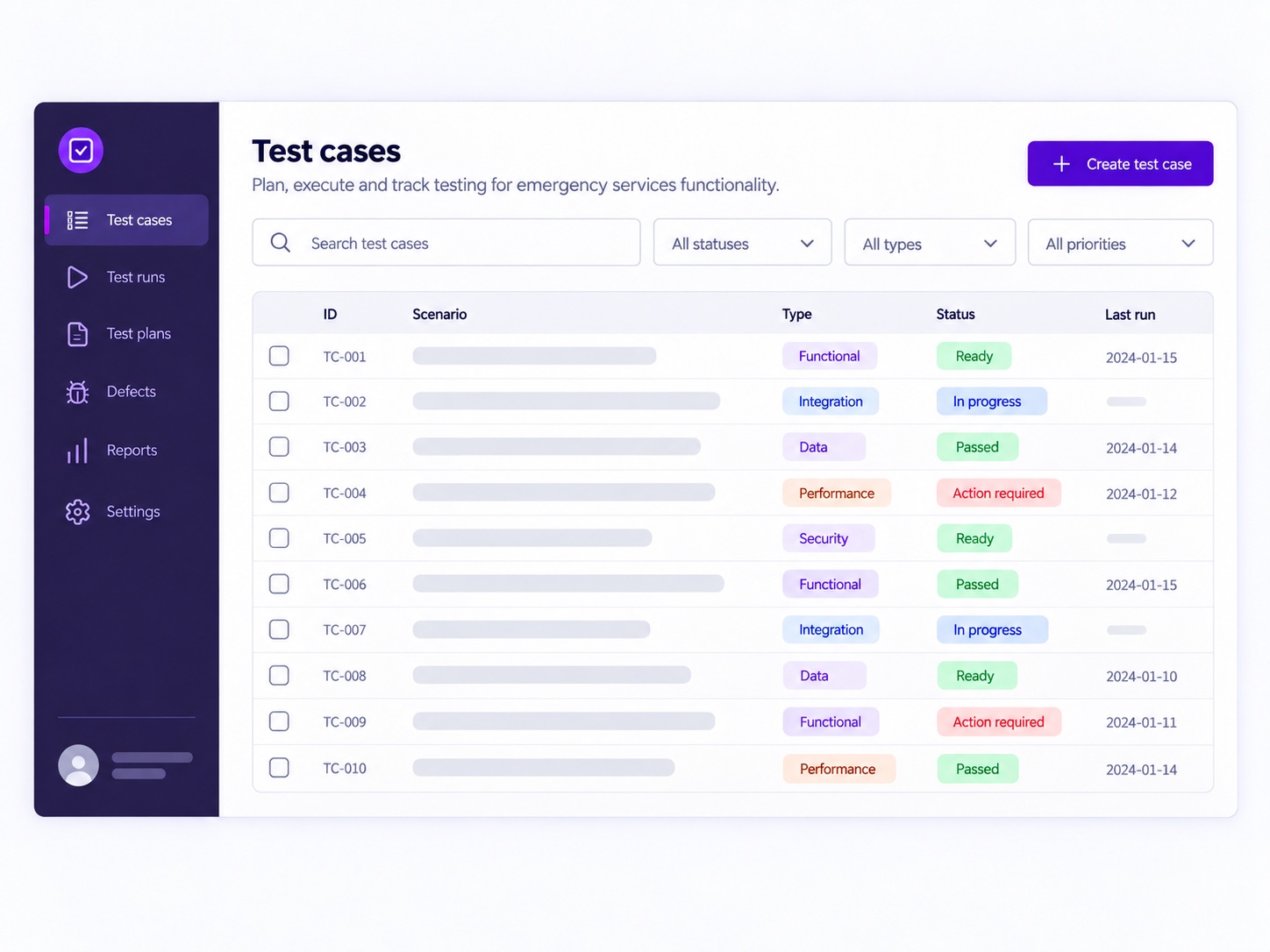
The project reached handoff with role-based testing and administrative workflows, responsive states, and design-system-aligned behaviour. The delivered system established clear responsibility boundaries and implementation-ready behaviour across testing and administrative workflows.
How this work shaped my product design approach.
Building the testing portal from the ground up reinforced the value of defining responsibilities and access boundaries before designing screens. Working within an established design system allowed me to focus attention on the domain-specific workflows that mattered most. The experience strengthened my ability to establish coherent product direction under technical and regulatory constraints while preparing designs for engineering handoff.
Email required to receive your login code.
INSTANT ACCESSInstant access lasts 7 days and includes all Controlled case studies.