Shipment and operational work had to live inside one platform even though different people needed different tools, information, and actions. The experience needed to reduce irrelevant complexity without fragmenting the product into separate role-specific systems.
Three organizational levels and 17 distinct user roles created a permissions and workflow problem, not simply a screen-design problem. The system had to support different actions and information across shipment management, user administration, tracking, and operations while preserving shared interaction logic and responsive behaviour.
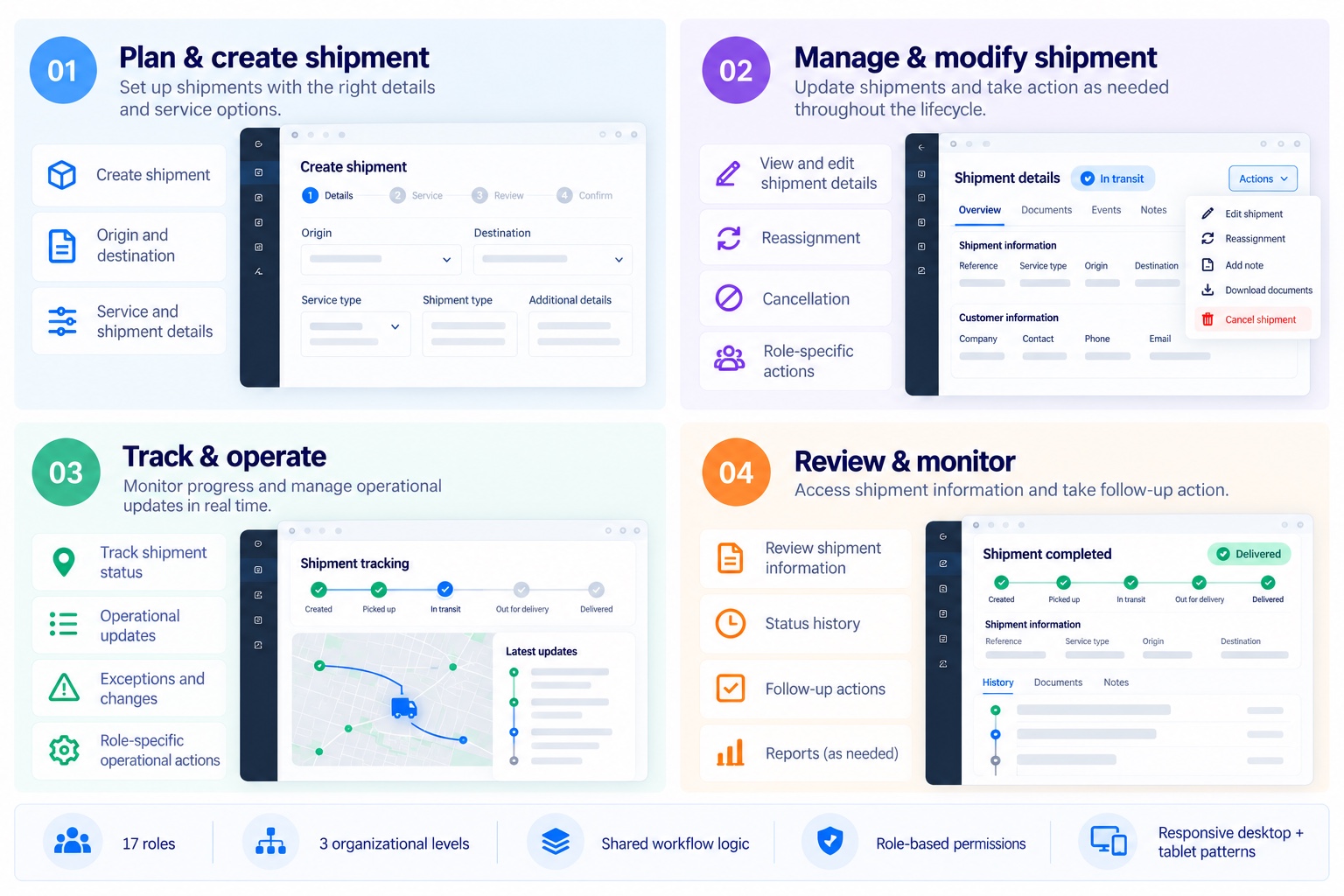
Through mobileLIVE, I led discovery and product design for core platform workflows. I mapped role and permission differences, designed responsive interaction patterns and detailed Figma flows, and worked with product and engineering to turn operational rules and edge cases into implementation-ready behaviour.
I treated permissions and role context as product architecture, then reused shared workflow patterns underneath that structure. This avoided two weak extremes: 17 disconnected experiences or one overloaded universal interface. The trade-off was more explicit system logic in exchange for clearer, task-relevant experiences and a more maintainable product model.
The work produced reusable role-based workflows, responsive states, and a shared design-system foundation across major platform areas. The evidence demonstrates one coherent product model across different responsibilities without relying on an unverified production-performance claim.
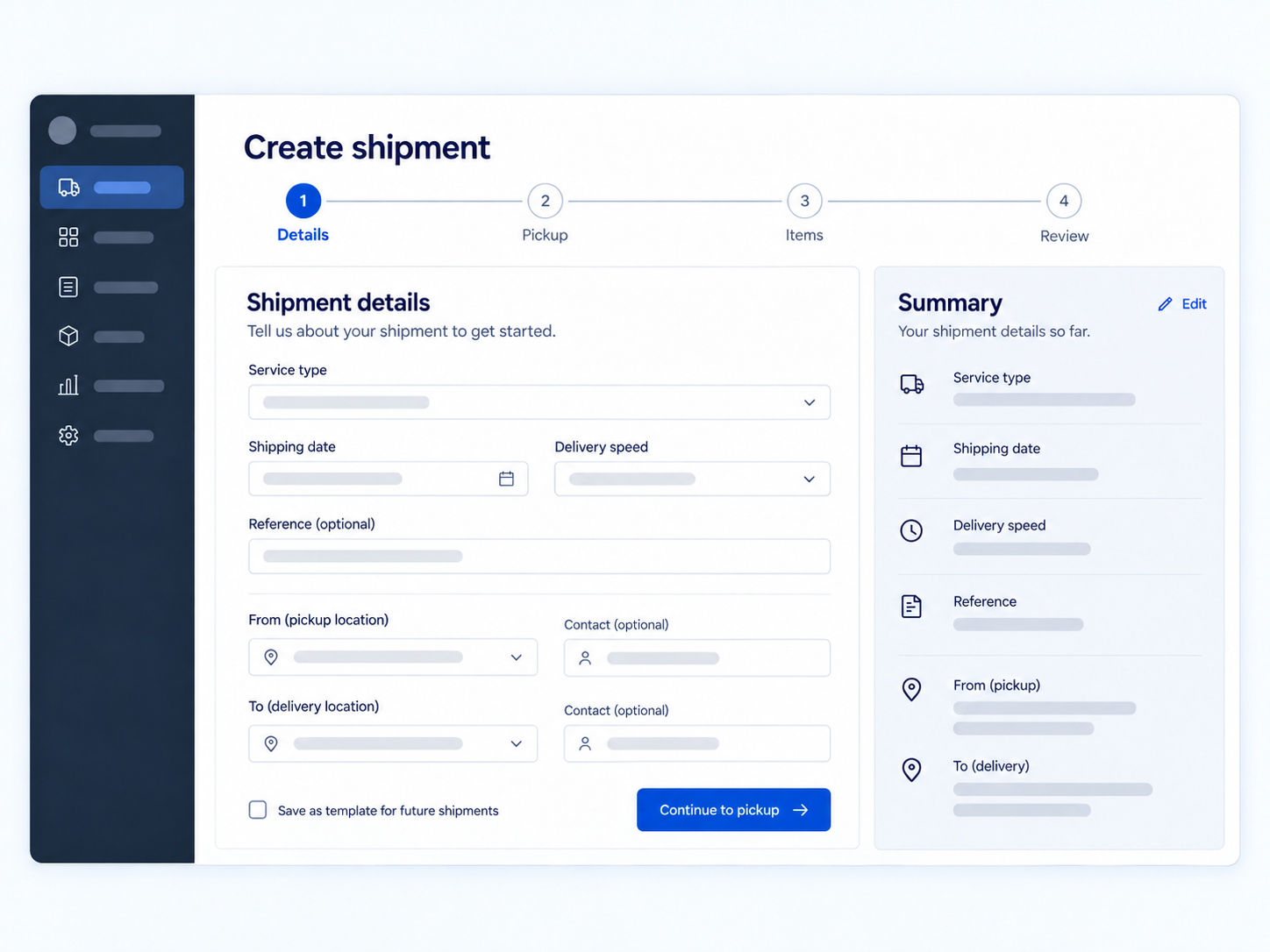
Explore the deeper workflow logic, implementation context, and approved client-specific material behind this project.
VIEW FULL CASE STUDYOnce verified, you’ll get 7-day access to all controlled case studies.